 Merken
 One rainy afternoon, I found myself staring into an nearly empty pantry, wondering what could possibly turn a carton of vegetable broth and a block of silken tofu into something worth eating. What emerged from that pot was this soup—delicate, nourishing, and somehow more comforting than anything I'd planned. It became my go-to when I needed something fast but didn't want to sacrifice flavor or care.
I served this to my sister when she was going through a phase of eating only plant-based foods, and she actually asked for the recipe instead of just being polite about it. That's when I realized this wasn't just a quick weeknight fix—it was something people genuinely wanted to make again.
Ingredients
- Low-sodium vegetable broth (1.5 liters): This is your foundation, so don't use the salty stuff unless you enjoy playing seasoning catch-up all through cooking.
- Soy sauce (2 tablespoons): Use tamari if gluten matters to you, and taste as you go because brands vary wildly in saltiness.
- Fresh ginger (1 tablespoon, thinly sliced): Pre-sliced feels lazy, but honestly those thin coins of ginger steep so much better than chunks.
- Garlic (2 cloves, minced): The moment these hit the hot oil is when your kitchen smells like you actually know what you're doing.
- Sesame oil (1 teaspoon): Just a teaspoon, because this stuff is potent in the best way—more feels greasy, less feels like you forgot it existed.
- Carrot (1 medium, julienned): Those thin matchsticks cook fast and look elegant without any real effort on your part.
- Shiitake mushrooms (100 g, sliced): They release an earthy depth that regular mushrooms can't match, and they hold their shape beautifully.
- Baby bok choy (100 g, chopped): The tender leaves cook in seconds, so add them late or they'll disappear into mush.
- Red bell pepper (1 small, thinly sliced): This brings sweetness and color, and the thin slices mean they don't need a long time in the pot.
- Spring onions (2, sliced): Half the flavor comes from the white parts heating through, half from the fresh green tops you scatter at the end.
- Silken tofu (300 g, cubed): Silken means it's delicate and creamy—firm tofu works too if you want texture, but silken melts into the broth like it belongs there.
- Fresh cilantro (optional): A sprinkle at the end transforms this from good to restaurant-quality in seconds.
- Toasted sesame seeds (1 teaspoon, optional): Toast them yourself if you have time, or buy them pre-toasted because they scatter so prettily and add real crunch.
- Lime wedges (optional): A squeeze brightens everything and cuts through the richness beautifully.
Tired of Takeout? 🥡
Get 10 meals you can make faster than delivery arrives. Seriously.
One email. No spam. Unsubscribe anytime.
Instructions
- Toast the aromatics in oil:
- Heat sesame oil in a large pot over medium heat until it shimmers, then add minced garlic and sliced ginger. You'll smell it immediately—that's your signal it's working. Let them sizzle for about a minute until your kitchen fills with that unmistakable fragrance that makes everything feel intentional.
- Build your broth base:
- Pour in the vegetable broth and soy sauce, stirring gently to combine. Bring it to a simmer—not a rolling boil, because you want this to be gentle on the delicate tofu coming later.
- Add the sturdy vegetables first:
- Drop in the julienned carrot, sliced mushrooms, and bell pepper strips. Let them simmer for about five minutes, which gives them just enough time to soften while still keeping their integrity.
- Finish the vegetables:
- Add the chopped bok choy and spring onion whites (save the green tops for garnish). Cook for two to three minutes until they're tender but still have some brightness to them.
- Introduce the tofu gently:
- This is where patience matters—carefully add the cubed silken tofu, letting it settle into the broth without aggressive stirring. A gentle simmer for two minutes just warms it through and lets it absorb all those flavors around it.
- Taste and season:
- Take a spoon, taste what you've made, and decide if it needs a splash more soy sauce. Every broth tastes slightly different, so trust your palate here.
- Serve with intention:
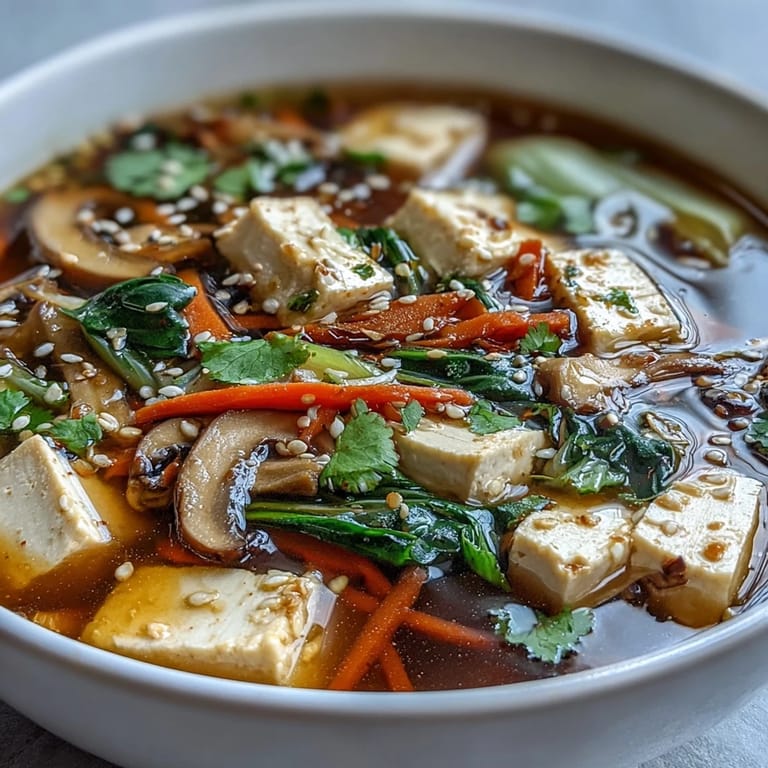
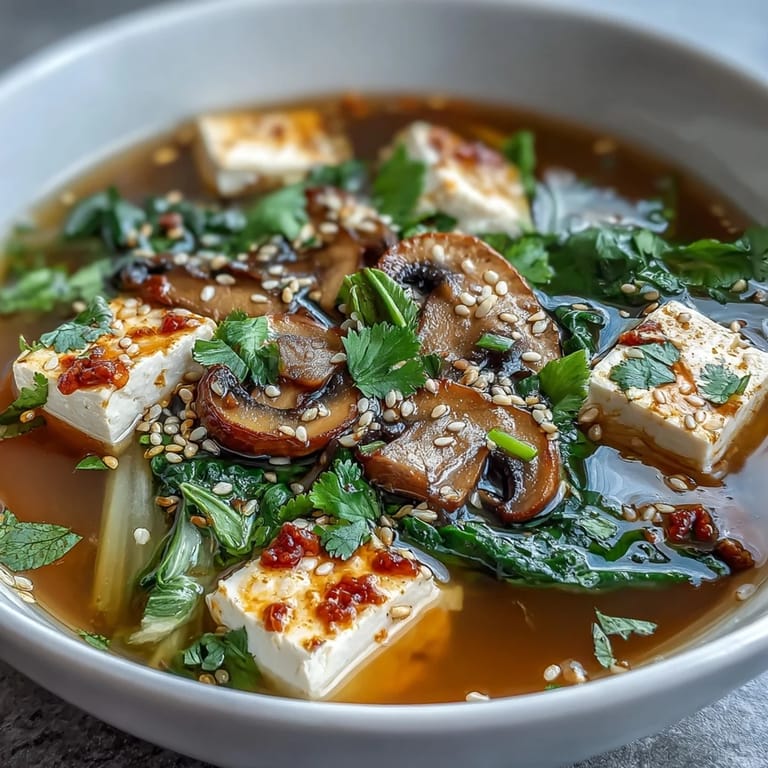
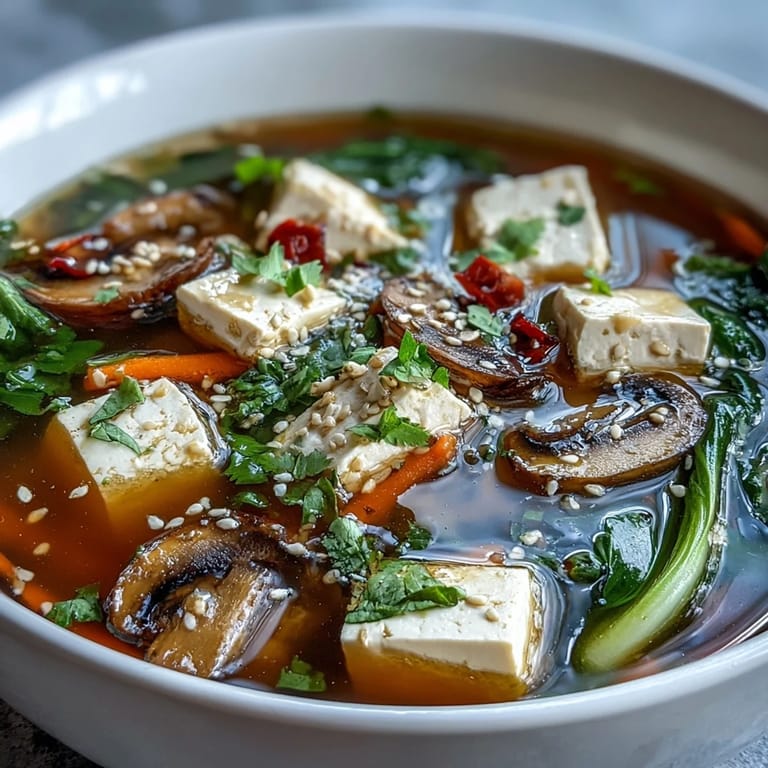
- Ladle soup into bowls and scatter cilantro, sesame seeds, and sliced spring onion greens on top. A squeeze of lime at the table lets everyone decide how bright they want their bowl to be.
 Merken
 My neighbor brought over her elderly mother one evening, and this soup appeared on the table almost reflexively. What started as a weeknight dinner became a conversation that lasted two hours, with the soup cooling and being reheated and somehow becoming even better. Sometimes food does that—it stops being the main event and becomes the permission to sit somewhere and just be together.
Why This Soup Feels Like Self-Care
There's something about a warm bowl with vegetables you can actually see and taste individually that feels less indulgent than other comfort foods, but also somehow kinder. It's light enough that you don't feel heavy afterward, but substantial enough that it actually satisfies you. I think that's why I make it on days when I'm tired but not in the mood for anything heavy—it meets me exactly where I am.
Making It Your Own
The ingredient list here is really just a suggestion that happens to work beautifully. I've made this with snow peas instead of bok choy, with enoki mushrooms stirred in at the last second, with fresh chili sliced thin for heat. The structure stays the same—broth, quick-cooking vegetables, delicate tofu—but your pantry and mood can absolutely change what actually lands in the pot.
The Quiet Magic of Simple Things
This soup taught me that impressive cooking doesn't always require impressive ingredients or complicated techniques. Sometimes it just requires paying attention—watching the ginger steep into the broth, noticing when vegetables go from raw to perfect, understanding that the final garnish isn't decoration but flavor. There's real skill in simplicity, and making this soup right means understanding that every single element matters, even when nothing seems fancy.
- If you find silken tofu intimidating, firm tofu works just fine and gives you a less creamy but more textured result that's equally delicious.
- Make the broth ahead if your mornings are hectic—the garlic and ginger actually taste better after sitting overnight, like they've had time to think about what they're doing.
- Leftover soup keeps beautifully in the refrigerator for three days, though the vegetables soften more with time and the broth becomes richer.
 Merken
 This soup is the kind of recipe that gets better every time you make it, not because it changes but because you understand it more deeply. It's comfort without apology, nutrition without pretension.
Fragen und Antworten zum Rezept
- → Kann ich festen Tofu statt Seidentofu verwenden?
Ja, fester Tofu bietet mehr Biss und hält seine Form besser beim Kochen. Er eignet sich besonders, wenn Sie eine texturierte Variante bevorzugen.
- → Wie lässt sich die Suppe würzig machen?
Geben Sie vor dem Servieren etwas Chilöl oder frische Chilischoten hinzu. Alternativ funktioniert auch ein Spritzer Sriracha oder scharfe Asian-Chili-Sauce.
- → Welche Gemüsealternativen passen gut?
Schneideerbsen, Chinakohl oder Enoki-Pilze ergänzen die Suppe hervorragend. Auch Mungobohnen-Sprossen oder Spinat lassen sich gut einarbeiten.
- → Ist die Suppe vorauskochbar?
Ja, die Basis hält sich im Kühlschrank bis zu 3 Tage. Fügen Sie den Tofu und zarten Gemüse wie Pak Choi erst beim Erwärmen hinzu, damit sie nicht zu weich werden.
- → Wie macht man die Suppe glutenfrei?
Ersetzen Sie herkömmliche Sojasauce durch Tamari. Achten Sie darauf, dass alle anderen Zutaten, insbesondere die Brühe, zertifiziert glutenfrei sind.
- → Kann ich die Suppe einfrieren?
Die Brühe mit Gemüse lässt sich gut einfrieren. Tofu sollte nach dem Auftauen frisch hinzugefügt werden, da die Textur im Gefrierschrank leiden kann.