 Merken
 There's something about arranging a board that makes you feel less like you're preparing food and more like you're composing a small edible landscape. I discovered this one autumn afternoon when a friend texted asking if I could throw together something for a last-minute gathering, and I found myself standing in front of my pantry with an armful of breads, a colander of fruit, and absolutely no plan. Two hours later, after moving things around like I was rearranging furniture, I realized the arc of those sliced breads looked exactly like a scythe cutting through golden wheat. That's when The Harvest Scythe was born—part accident, part intentional beauty.
The real magic happened when I set this board down in the center of a dining table and watched people's faces light up. My neighbor reached for a slice of pear, draped it across a piece of seeded rye, added a corner of brie, and made this small satisfied sound that told me everything. That's when I understood this wasn't just appetizer—it was an experience, a conversation starter, something that made people slow down and actually taste what they were eating together.
Ingredients
- 1 small baguette, sliced: The crispy exterior gives texture and a slight chew that balances soft fruits and cheese.
- 1 cup multi-grain crackers: These hold their crunch longer than bread and add visual variety with their speckled surface.
- 1 cup seeded rye bread, thinly sliced: Rye has an earthy, slightly tangy flavor that pairs beautifully with both sweet and savory elements.
- ½ cup cooked and cooled farro or barley: These grains add substance, a chewy texture, and reinforce the harvest theme visually.
- 1 cup seedless red grapes: Their natural sweetness and firm bite provide juicy punctuation between bread and cheese.
- 1 cup sliced pears: Slice these just before serving so they stay tender and don't oxidize too much.
- 1 cup sliced apples: A squeeze of lemon juice keeps them bright and prevents browning.
- ½ cup dried apricots: These bring chewy sweetness and a beautiful golden hue to the arrangement.
- ½ cup fresh figs, halved: If figs aren't in season, dried ones work beautifully and last longer on the board.
- 100 g brie cheese, sliced: Keep this cold until the last moment so it holds its shape and doesn't become too soft.
- 100 g aged cheddar, cubed: The sharpness cuts through sweetness and adds a salty anchor to the board.
- ¼ cup honey or fig jam: This bridges the gap between sweet and savory, acting as both garnish and dipping sauce.
- Fresh mint leaves: A handful of bright green adds life and aroma, and a small leaf on top of fruit prevents browning.
- Roasted nuts (almonds or walnuts): Toast these yourself if possible—the smell alone is worth it, and they taste infinitely better warm.
Tired of Takeout? 🥡
Get 10 meals you can make faster than delivery arrives. Seriously.
One email. No spam. Unsubscribe anytime.
Instructions
- Set your stage with breads:
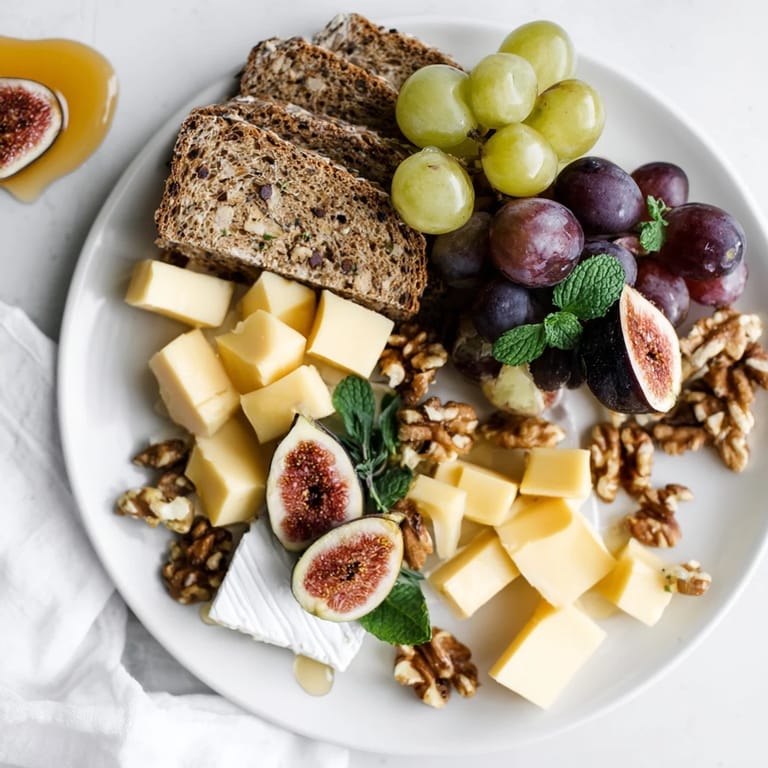
- Lay out your large wooden board or platter and imagine a scythe blade sweeping from one corner toward the center. Arrange your sliced baguette, rye bread, and crackers along this curved line, leaving some overlap so they nest together naturally. The arrangement should feel organic, not rigid—a few pieces slightly askew is exactly right.
- Build the grain foundation:
- Along the inner curve of your bread arc, scatter the cooked farro or barley in a thin, loose layer. This represents the harvested grain and fills gaps while adding another textural element. You're creating depth here, not just filling space.
- Introduce the fruit in waves:
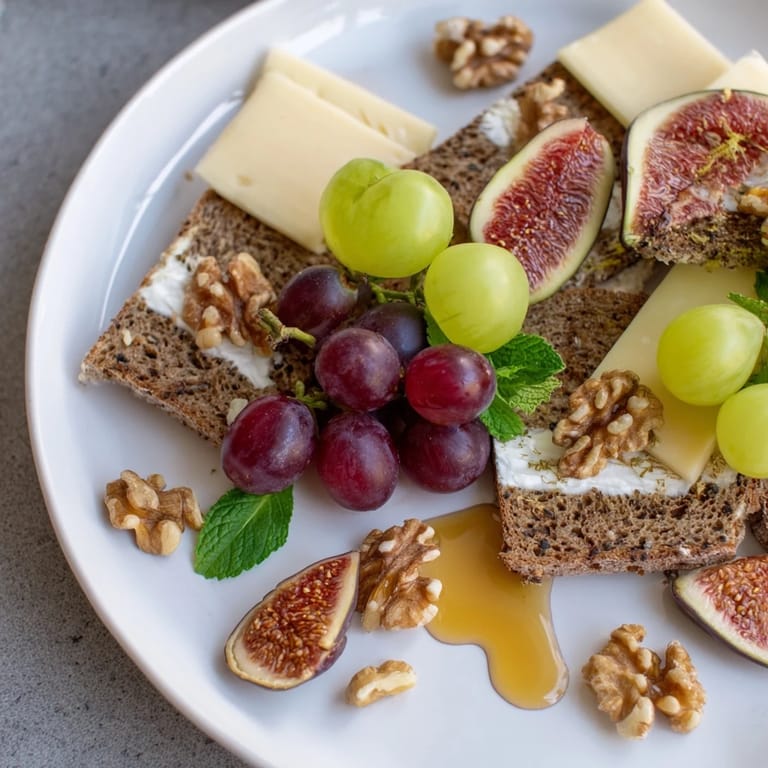
- Fan your sliced pears and apples alongside the breads, letting colors flow into one another. Scatter the grapes across the board in small clusters, and tuck dried apricots and figs into the gaps. The goal is natural variation—no two sections should look identical.
- Position cheese for easy pairing:
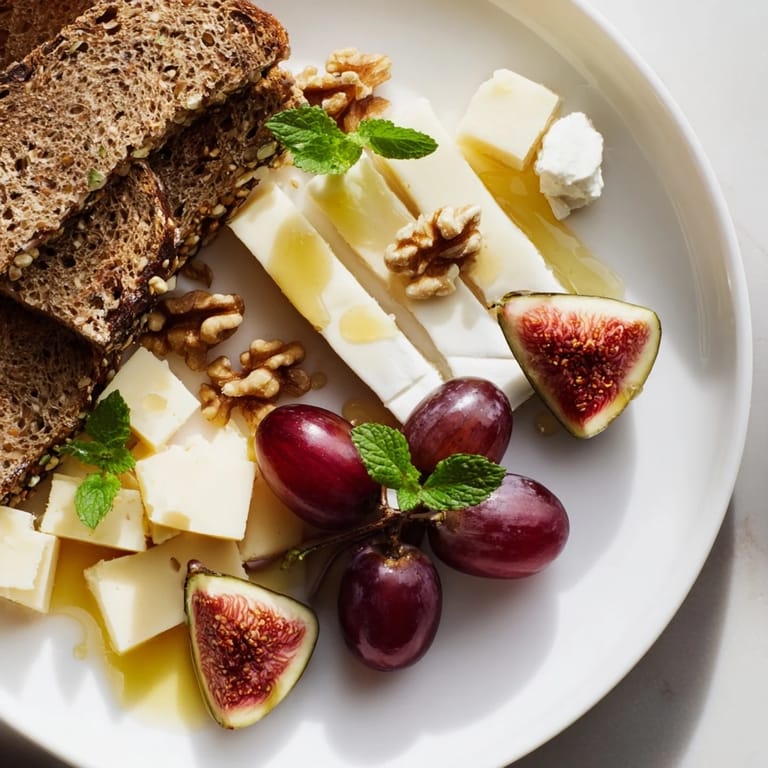
- Create two or three small rustic clusters of brie and cheddar near different sections of bread, so someone at any angle of the board can easily grab bread and cheese together. Don't spread them evenly; concentrate them strategically.
- Add honey and finishing touches:
- Place small bowls of honey or jam at strategic points along the edge—people will use these as dipping stations. Finally, scatter your roasted nuts across the entire board and tuck fresh mint leaves between fruits and breads for color and aroma. Step back and look—if there are any large blank wooden spaces, add a few more nuts or mint leaves.
- Serve at the moment of readiness:
- Bring this to the table immediately so everything is at its peak freshness and temperature. The texture contrast between room-temperature bread and cool fruit is part of the magic.
 Merken
 I've since made this board for garden parties, for quiet afternoons with one close friend, for family dinners where everyone was tired and no one wanted a complicated meal. Each time, it became something more than the sum of its ingredients—a reason to sit together, to pause, to taste things slowly. That's the real harvest here.
The Story Behind the Scythe
The name came from that first chaotic arrangement, when I realized that the way I'd instinctively placed the breads mimicked the curve of a harvest scythe sweeping through grain. It stuck because it felt honest—this is food that celebrates the gathering season, that honors the abundance of orchards and bakeries. There's no pretense here, just good things arranged with intention. Every time someone's eyes light up at the sight of it, I think about that accidental moment of recognition, and how sometimes the best ideas come from standing in your kitchen with no plan at all.
Variations for Every Season
The beauty of this board is its flexibility—it's genuinely different depending on what's growing or baked where you live. In summer, I swap the dried apricots for fresh stone fruits, add berries scattered across the top, and sometimes include a creamy goat cheese instead of brie. In winter, I lean harder into the dried fruits, add roasted root vegetable chips if I'm feeling experimental, and sometimes include a sharp aged gruyère. Spring calls for lighter cheeses and brighter citrus; fall celebrates the grapes and pears and darker whole grains. The structure stays the same, but the personality shifts with the seasons.
Making It Your Own
This board thrives on personalization, and part of the joy is tailoring it to who you're feeding and what you have available. I've made gluten-free versions for friends with celiac disease by simply swapping the breads and crackers, and honestly, the arrangement looked just as stunning. I've done fully vegan boards by skipping cheese entirely and adding roasted chickpeas and tahini dip instead. The narrative of the scythe and harvest works whether you're using conventional ingredients or building something completely plant-based.
- Swap any cheese for plant-based versions, or skip it entirely and let the nuts add richness.
- Add seasonal vegetables like cucumber slices, roasted beet chips, or crispy kale for texture variation.
- Experiment with different spreads—herb butter, honey drizzled with thyme, or a simple balsamic reduction can replace the jam.
 Merken
 What started as an improvised solution to a last-minute gathering has become one of my most-reached-for recipes. It's proof that sometimes the most memorable meals aren't complicated—they're just thoughtful.
Fragen und Antworten zum Rezept
- → Wie bewahrt man die Frische der Früchte am besten?
Früchte sollten kurz vor dem Servieren gewaschen und geschnitten werden, um Geschmack und Textur optimal zu erhalten.
- → Welche Brotsorten passen besonders gut zu der Platte?
Vielfältige Brotsorten wie Baguette, Roggen und Vollkorncracker bieten unterschiedliche Texturen und Aromen, die gut harmonieren.
- → Kann man die Käseauswahl variieren?
Ja, milde wie Brie oder kräftige Sorten wie gereifter Cheddar ergänzen die süßen und herzhaften Elemente.
- → Welche Nüsse eignen sich als Garnitur?
Mandeln und Walnüsse bringen angenehme Knusprigkeit und Aroma, können aber je nach Geschmack angepasst werden.
- → Wie wird die sichelförmige Anordnung erzielt?
Indem Brotscheiben und Körner in einer geschwungenen Linie auf einer großen Platte gelegt werden, entsteht die charakteristische Sichel-Form.