 Merken
 Every autumn, my kitchen fills with the smell of roasted root vegetables, and I find myself thinking about journeys—how my grandmother used to arrange everything on the table like she was telling a story with food. This dish came together one November when I wanted to honor that sense of connection, of links binding us together around the table. I started imagining how the turkey and vegetables could be arranged not as a scattered platter, but as a chain, each piece deliberately placed to echo the Mayflower's voyage and the bonds that hold communities together. The browns and golds of the roasting pan seemed to glow like autumn itself was blessing the meal.
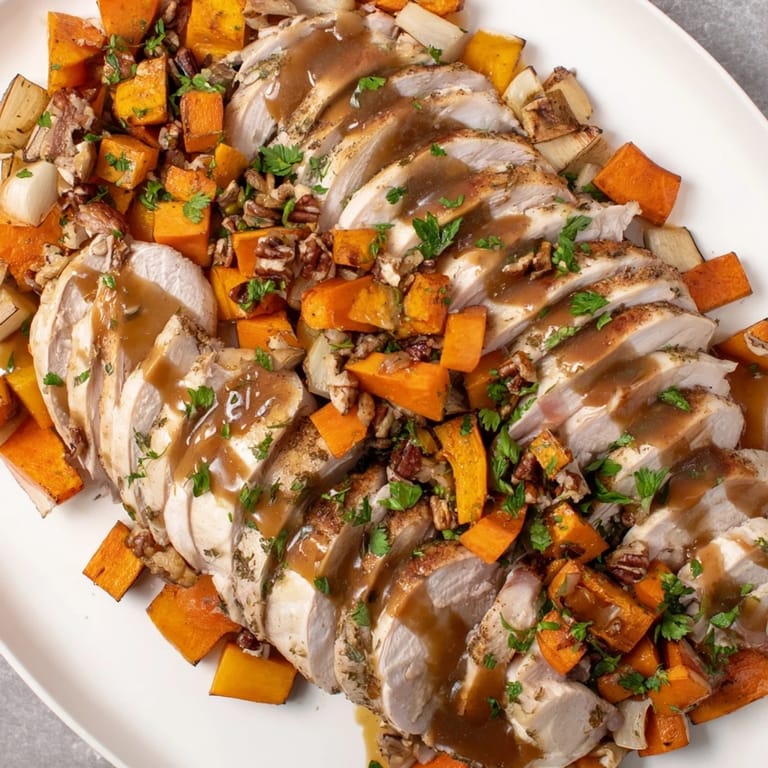
I made this for a small Thanksgiving when my cousin called to say she couldn't travel home, so we cooked together over video while she was thousands of miles away. As I arranged those root vegetables in their careful chain, she narrated memories of our grandmother's table, and somehow the distance didn't matter anymore. When we finally took a photo of that golden platter and she saw it on her screen, she said it looked like home. That's when I knew this dish wasn't just about the food.
Ingredients
- Turkey breast, boneless with skin: The skin renders golden and protects the meat from drying out; aim for a piece that sits comfortably on your roasting pan so air can circulate underneath.
- Carrots and parsnips: Cut them the same size so they roast evenly, and don't peel the parsnips too thin or they'll shrivel.
- Sweet potatoes and celery root: These two create an earthy sweetness that feels both grounding and celebratory; celery root especially becomes silky when roasted.
- Smoked paprika and cumin: These spices whisper rather than shout, warming the vegetables from inside without overwhelming their natural flavors.
- Chicken or turkey stock: Use the good stuff here—it's the backbone of your gravy, so taste it first.
- Pecans and fresh parsley: These are your final flourish, adding texture and brightness that lift the whole plate.
Tired of Takeout? 🥡
Get 10 meals you can make faster than delivery arrives. Seriously.
One email. No spam. Unsubscribe anytime.
Instructions
- Set your stage:
- Preheat your oven to 200°C (400°F) and give it five minutes to truly heat through. Arrange your roasting pan and baking sheet so you know exactly where they'll sit.
- Dress the turkey:
- Pat the turkey breast dry with paper towels—this is the secret to golden skin. Rub it generously with olive oil, then sprinkle the thyme, sage, salt, and pepper, working the seasonings into every crevice and across the skin.
- Begin the turkey's journey:
- Place it skin-side up in your roasting pan and let it roast for 1 hour 15 minutes, watching the skin turn deep amber. The internal temperature should reach 74°C (165°F) when you check it with a thermometer. Once it's done, cover it loosely with foil and let it rest—this is non-negotiable, as it keeps the meat tender.
- Roast the roots:
- While the turkey cooks, toss your cut vegetables with olive oil, smoked paprika, cumin, salt, and pepper until they're evenly coated. Spread them on a baking sheet in a single layer and slide them into the oven. After 20 minutes, stir them gently so they brown on all sides, then continue for another 20–25 minutes until they're golden and fork-tender.
- Build the gravy:
- Melt butter in a saucepan over medium heat and whisk in the cornstarch until it's completely smooth—no lumps allowed. Slowly pour in your stock while whisking constantly, as if you're coaxing the mixture to become silk. Add the soy sauce and let everything simmer for 5–7 minutes until it thickens into something glossy and rich.
- Arrange your chain:
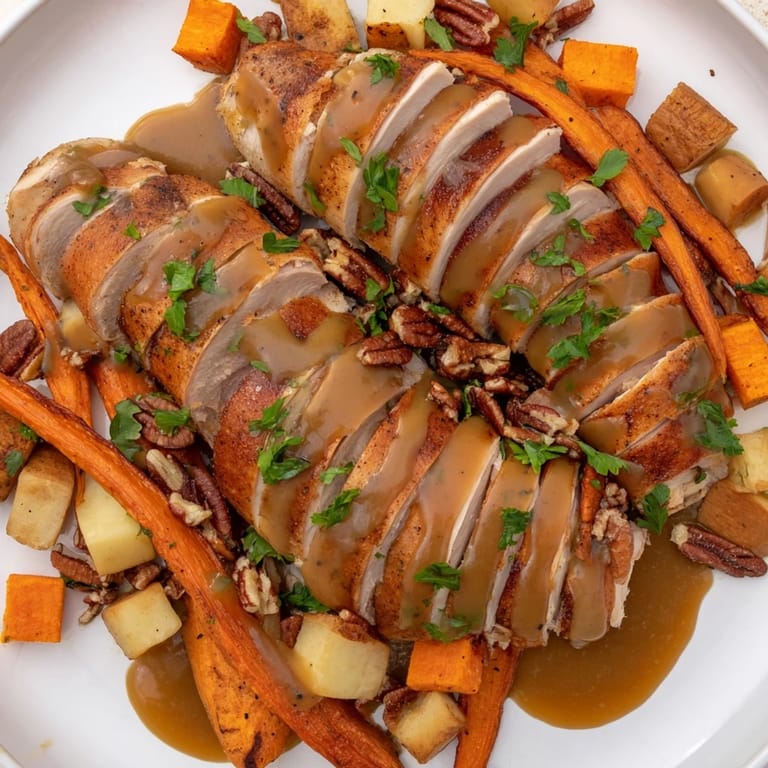
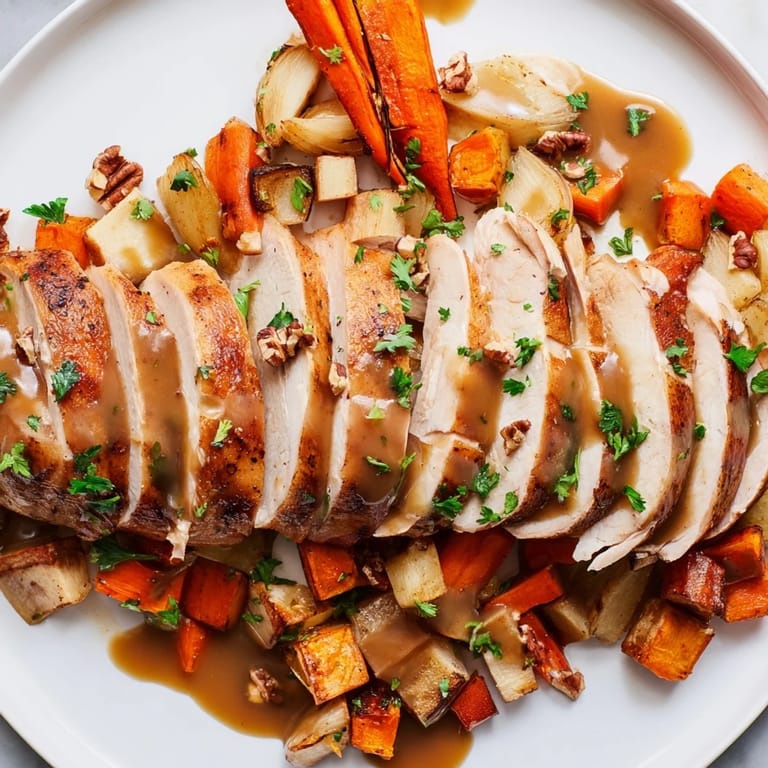
- Slice the rested turkey into pieces about half an inch thick. On a large platter, begin laying down the roasted vegetables and turkey slices in overlapping rows or concentric rings, each piece slightly tucked behind the next like links in a chain. Drizzle the warm gravy across the arrangement, then scatter the chopped parsley and toasted pecans on top.
 Merken
 I learned early on that this dish teaches patience. The first time I made it, I was impatient with the resting turkey and started slicing right away—the juices spilled all over the platter, and the meat was slightly tough. The second time, I set a timer, made tea, and actually waited those fifteen minutes. Everything changed.
The Meaning Behind the Chain
The arrangement isn't just decorative; it's a conversation starter. When people see the overlapping pattern, they ask about it, and suddenly you're talking about journeys and connections and what it means to gather. That's the real gift of this dish—it transforms a meal into a moment where the food itself becomes the story you're telling together.
Variations That Sing
Once you understand the structure, this dish welcomes improvisation. I've made it with roasted Brussels sprouts and beets added to the mix, their deep purple mixing with the golden roots for a more dramatic tableau. For friends who don't eat meat, thick slices of roasted portobello mushrooms stand in beautifully for the turkey, their meaty texture equally satisfying. The gravy works exactly the same way, just use vegetable stock instead.
Building Flavor and Color
The secret to making this dish feel less like Thanksgiving and more like poetry is in the seasoning choices. Smoked paprika adds a whisper of depth without smokiness, and cumin brings warmth that makes people ask what's in the vegetables without being able to name it. The soy sauce in the gravy does something similar—it doesn't taste salty or Asian; it simply makes every other flavor more itself.
- Taste your gravy before plating and adjust the salt and pepper with confidence, knowing that seasoning is the difference between good and memorable.
- Toast your pecans in a dry skillet for two minutes right before serving so they're warm and fragrant.
- If you're making this ahead, roast everything, store it in separate containers, and reheat gently before final assembly so nothing gets cold.
 Merken
 This dish has become my love letter to autumn and to the people I cook for. Every time I arrange those golden roots and turkey in their careful chain, I think of all the hands that have helped make the harvest, and all the tables where this meal will spark a conversation about what binds us together.
Fragen und Antworten zum Rezept
- → Wie lange braucht der Truthahn zum Garen?
Der Truthahn wird etwa 1 Stunde und 15 Minuten bei 200°C gebraten, bis er eine Kerntemperatur von 74°C erreicht.
- → Welche Gemüsesorten werden verwendet?
Karotten, Pastinaken, Süßkartoffeln und Sellerie werden zusammen mit Gewürzen geröstet, um den Geschmack zu intensivieren.
- → Wie wird die Bratensauce zubereitet?
Butter und Maisstärke werden als Basis aufgeschmolzen, dann wird Brühe unter ständigem Rühren hinzugefügt und mit Sojasauce verfeinert.
- → Gibt es eine vegetarische Alternative?
Statt Truthahn können geröstete Portobello-Pilze verwendet werden, und die Sauce wird mit Gemüsebrühe zubereitet.
- → Welche Beilagen passen gut dazu?
Cranberry-Sauce bietet eine fruchtige Note, während geröstete Rosenkohl oder Rote Beete zusätzlich Farbe und Geschmack hinzufügen.
- → Sind Nüsse enthalten?
Optional können geröstete Pekannüsse als Garnitur verwendet werden; sie sind jedoch nicht zwingend erforderlich.